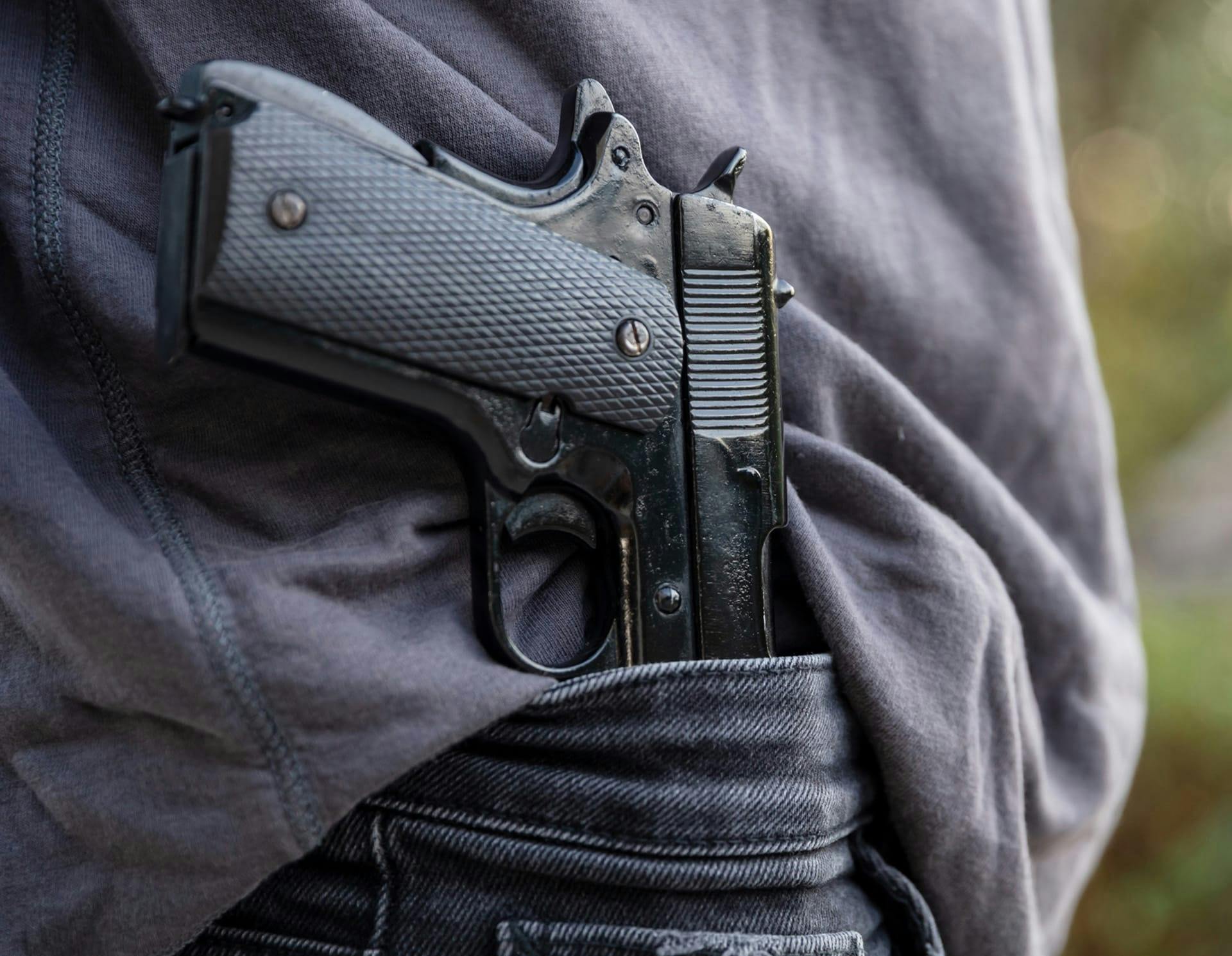
Potential Penalties for Firearm Possession Charges

Possession of a firearm by a convicted felon under § 790.23 is generally a second-degree felony, punishable by up to 15 years in prison and a $10,000 fine.

When the firearm is in the person's actual possession, Florida's “10-20-Life” law can impose a 3-year mandatory minimum sentence. These outcomes depend heavily on the specific facts, including whether possession was actual or constructive and the person's underlying criminal history, so a case-by-case evaluation is necessary to understand realistic exposure.

Who Is Prohibited From Possessing a Firearm in Florida

Under Fla. Stat. § 790.23, it is generally unlawful for a person to own or have in their care, custody, possession, or control any firearm, ammunition, or electric weapon if that person:

  • Has been convicted of a felony in Florida, in another state, or under federal law
  • Was found delinquent as a juvenile for an offense that would have been a felony if committed as an adult, and is under 24 years of age
  • Is otherwise disqualified under separate provisions, such as being subject to a domestic violence, stalking, or cyberstalking injunction under Fla. Stat. § 790.233

Florida law recognizes both actual possession, meaning the firearm is on the person, and constructive possession, meaning the firearm is in a place the person controls and knows about, such as a shared vehicle or residence.

Florida courts have defined constructive possession as existing where a person, without physically holding a firearm, knows of its presence and can maintain control over it (Barlatier v. State, 26 So. 3d 29, 32 (Fla. 3d DCA 2009)). Constructive possession cases often turn on whether the state can prove the accused actually knew the firearm was present.


Banner media

Common Defenses to Firearm Possession Charges

  • Disputing knowledge or control: In constructive possession cases, arguing the accused did not know the firearm was present or did not have control over the location where it was found.
  • Challenging the underlying disqualification: Confirming whether a prior conviction actually qualifies as a disqualifying offense, or whether firearm rights had already been restored.
  • Unlawful search or seizure: Moving to suppress a firearm discovered through a search that violated the Fourth Amendment or Florida's search and seizure protections.
  • Chain of custody and forensic issues: Challenging how the firearm was recovered, handled, and tested.
Person holding gun

What Happens After a Firearm Possession Arrest in Hillsborough County

  1. Arrest and booking, often following a traffic stop, search, or separate investigation.
  2. First appearance, where the bond is addressed, which can be affected by mandatory minimum exposure.
  3. Arraignment, where the charge is formally read, and a plea is entered.
  4. Discovery, including review of the search that led to the recovery of the firearm and any related forensic evidence.
  5. Resolution, through negotiated plea, pretrial motion, or trial.

Steps to Take If You've Been Charged With Firearm Possession

  • Do not make any statements about the firearm to law enforcement without an attorney present.
  • Gather any documentation related to a prior restoration of civil rights or firearm authority, if applicable.
  • Note who else had access to the location where the firearm was found.
  • Contact a criminal defense attorney promptly, given the mandatory minimum sentencing exposure in many of these cases.
J. Kevin Hayslett

Why Choose Carlson Hayslett for a Tampa Firearm Possession Case

If you have been charged with unlawful firearm possession, the consequences can affect your freedom, future, and ability to legally possess a firearm. Our firearm possession defense attorneys in Tampa provide focused criminal defense and can investigate the allegations, assess the evidence, and pursue a defense based on the specific circumstances of your case.

Carlson Hayslett, P.A., has served the Tampa Bay community for more than 55 years. Throughout that time, our team has remained committed to providing clients with individualized attention and practical legal guidance. Our reputation is supported by:

  • Deep roots in the Tampa Bay and Clearwater legal communities
  • Extensive familiarity with local courts and the judges who preside over them
  • Leadership within the legal community, including involvement in the nomination of judges our clients now appear before
  • Recognition from respected legal organizations such as Super Lawyers, Florida Trial Lawyers, Martindale-Hubbell, and the Clearwater Bar Association

If you are facing firearm possession charges, Carlson Hayslett, P.A. is ready to help protect your rights. To schedule a free consultation, call 727-219-2272 or complete the form on this website today.

Firearm Possession FAQs

How can firearm rights be restored in Florida?

What is the difference between actual and constructive possession?

Does a firearm possession charge always carry a mandatory minimum sentence?

Can this charge be enhanced to a first-degree felony?

What if the firearm belonged to someone else in the house?

How can firearm rights be restored in Florida?

Generally through a formal restoration of civil rights and firearm authority or through having a conviction expunged, though this process is separate from a general restoration of civil rights and involves its own eligibility requirements.

What is the difference between actual and constructive possession?

Actual possession means the firearm was on the person's body or within their immediate physical control. Constructive possession means the firearm was in a place the person controlled and knew about, such as a car or home, even without being physically on them.

Does a firearm possession charge always carry a mandatory minimum sentence?

Not always. A 3-year mandatory minimum under Florida's 10-20-Life law generally applies when the firearm was in the person's actual possession, but the specific facts of each case determine whether this applies.

Can this charge be enhanced to a first-degree felony?

Yes, in certain circumstances, such as when the offense is connected to criminal gang activity, the charge can be enhanced. Whether an enhancement applies depends on the specific facts alleged.

What if the firearm belonged to someone else in the house?

Ownership alone is not the determining factor. The state must prove that the accused knowingly had control of the firearm, a fact often contested in shared-residence situations.

Disclaimer

This page is provided for general informational purposes only and does not constitute legal advice. Every firearm possession case depends on its own specific facts, and Florida firearms law is nuanced. Nothing on this page should be treated as a substitute for a case-specific consultation with a licensed attorney.

Free Case Evaluation Contact us today to learn how we can help you navigate your legal concerns.

This field is required.
Get Started
Contact us media
Accessibility: If you are vision-impaired or have some other impairment covered by the Americans with Disabilities Act or a similar law, and you wish to discuss potential accommodations related to using this website, please contact our Accessibility Manager at (727) 847-2737.
Contact Us