

It is illegal to commit assault or battery against anyone. But in the state of Florida, committing assault or battery against any member of certain protected groups can lead to increased charges and more serious legal penalties.
How does the law define assault and battery? What does it mean to commit assault and battery against a protected group? If you are facing criminal charges, a Tampa criminal defense attorney can help you understand your case. But for now, keep reading to learn about the criminal offense of committing assault and battery against a protected group.
What is Assault and Battery in Florida?
Many people think that the term “assault and battery” refers to one crime, but in Florida, assault and battery are two distinct criminal offenses.
Assault is defined as the intentional and unlawful threat by word or action to harm another person, which, combined with the ability to carry out the threat, makes the victim fear that they are in imminent danger. This is often referred to as “simple assault,” and it is classified as a second-degree misdemeanor in the state of Florida.
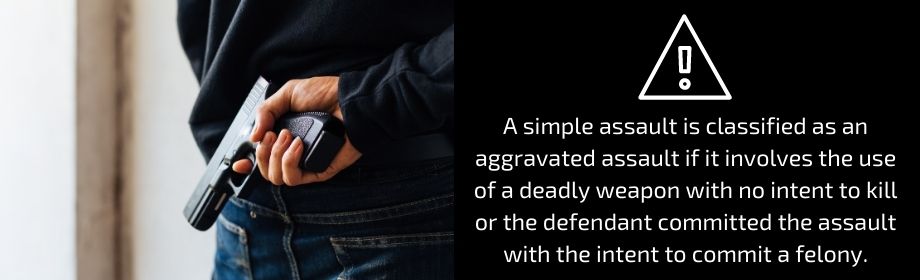
A simple assault is classified as an aggravated assault if it involves the use of a deadly weapon with no intent to kill, or if the defendant committed the assault with the intent to commit a felony. Because it is a more serious crime than simple assault, aggravated assault is classified as a third-degree felony.
Whereas assault refers to threatening physical violence, battery involves actual physical violence. In Florida, battery occurs when a person either:
- Intentionally touches, strikes, or hits another person without that person’s consent, or
- Intentionally inflicts bodily harm on another person.
Battery is a first-degree misdemeanor in Florida.
A battery crime is classified as “aggravated battery” if the defendant uses a deadly weapon or the victim suffers great bodily harm, permanent disability, or permanent disfigurement. Aggravated battery is classified as a second-degree felony in Florida.
What Does Florida Law Say About Assault and Battery Against Protected Groups?
Assault and battery are both considered serious crimes in the state of Florida. But these criminal offenses are considered even more serious when committed against members of certain protected groups.

Some of the people that are included in these “protected groups” are:
- Law enforcement officers, which include correctional officers, probation officers, agents of the Department of Corrections, police officers, and others
- Traffic accident investigation officers
- Parking enforcement specialists
- Licensed security guards
- Firefighters
- Emergency medical care providers, which include ambulance drivers, EMTs, paramedics, registered nurses, and others
- Public transit employees or agents, which include bus operators, train operators, security personnel, field supervisors, and others
- Railroad special officers
If you are charged with committing assault or battery against one or more of these individuals, the classification of your criminal offense will change, which means you will face more serious penalties. However, it’s important to note that the crime must occur while the member of the protected group is performing their job duties. Otherwise, it is considered a simple assault or battery.
What Are the Penalties For Assault and Battery Against Protected Groups in Florida?
Simple assault is typically a second-degree misdemeanor. But if you are charged with simple assault against a protected group, your charge is classified as a first-degree misdemeanor instead. A first-degree misdemeanor is punishable by up to 1 year in jail and a fine of up to $1,000.
Aggravated assault is typically a third-degree felony, but it is increased to a second-degree felony if it is committed against one of these protected groups. A second-degree felony conviction can result in penalties including up to $10,000 in fines and up to 15 years in prison.
If aggravated assault is committed against a law enforcement officer, the judge must impose a minimum sentence of 3 years in prison.

A battery crime against a protected group is increased from a first-degree misdemeanor to a third-degree felony. If you are convicted of a third-degree felony, you could face up to 5 years in prison and $5,000 in fines.
Aggravated battery is typically a second-degree felony, but it is increased to a first-degree felony when it is committed against a protected group. A first-degree felony conviction can result in a maximum fine of $10,000, in addition to up to 30 years in prison.
Similar to aggravated assault against a law enforcement officer, there is a minimum prison sentence for aggravated battery committed against a law enforcement officer. If you are convicted of this crime, you will face a minimum of 5 years in prison.
There are also minimum prison sentences imposed on defendants who commit battery against a protected group while in the possession of a firearm, destructive device, semiautomatic firearm and its high-capacity magazine, or machine gun. If you were in possession of a firearm or destructive device while committing battery against a protected group, you will face a minimum of 3 years in prison. But if you were in possession of a semiautomatic firearm and its high-capacity magazine or machine gun while committing battery against a protected group, you would face a minimum of 8 years in prison.
Fight Your Charges With the Help of An Experienced Criminal Defense Attorney
Have you been accused of committing assault and battery against a member of a protected group? If so, it’s in your best interest to seek legal representation from the skilled criminal defense attorneys at Carlson Meissner & Hayslett right away. Our attorneys have represented the accused in the greater Tampa Bay area since 1971. Since then, we’ve helped over 15,000 criminal defense clients fight their charges and reach the best possible outcome in their case. Now, let us help you. Call our law office to set up a free consultation with our team regarding your case.