
For more than 50 years, Carlson, Meissner & Hayslett has represented individuals, families, and businesses across Tampa Bay during some of the most stressful moments of their lives. As one of the highest-rated local law firms on Florida’s West Coast, we see firsthand how modern scams increasingly blur the line between technology, financial loss, and serious legal consequences.
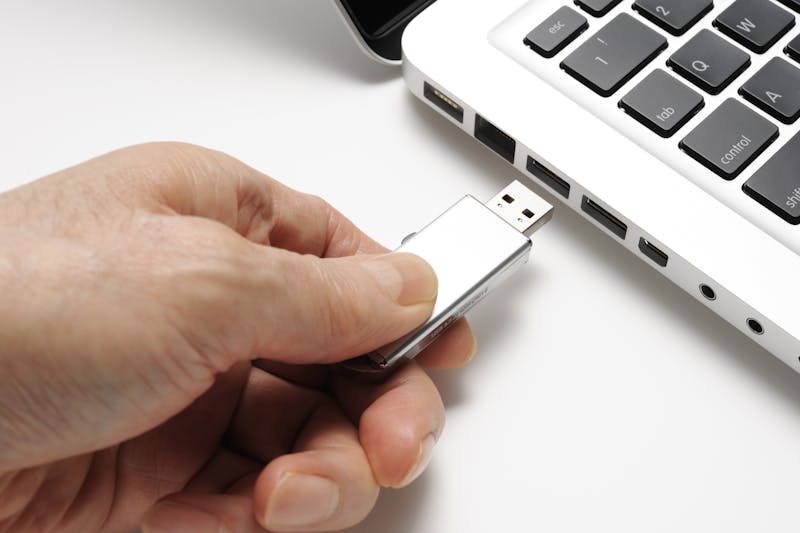
One of the fastest-growing threats now drawing warnings from law enforcement and federal agencies across Florida is deceptively simple: A USB flash drive.
It may be found in a parking lot, arrive in the mail, or be purchased cheaply online. But plugging an unknown USB device into your computer—even briefly—can trigger identity theft, financial fraud, business data breaches, and in some cases criminal or civil investigations. What begins as a cybersecurity issue often escalates into a legal one.
This is not theoretical.In this blog, we’re drawing on our decades of experience and local knowledge to help you understand what the scam is, what to do if you find one, and how we can help.
What Is the USB Flash Drive Scam?
Federal authorities refer to this scheme as a “USB baiting attack.” According to the Cybersecurity and Infrastructure Security Agency (CISA), these attacks use USB devices intentionally loaded with malicious software that activates automatically once inserted into a computer, without opening files or clicking links.
Once connected, a compromised USB device can:
- Install malware or ransomware
- Record keystrokes and steal passwords
- Access financial and tax information
- Spread across home or workplace networks
- Allow long-term remote access without detection
Many victims do not realize anything is wrong until weeks later, when accounts are drained, credit is damaged, or confidential information is exposed.
The “Lost USB” Trap: Why This Scam Works
One of the most effective versions of this scam preys on natural human inquisitiveness.
USB drives are intentionally left in public places like parking lots, office buildings, medical facilities, courthouses, and apartment complexes. Some are labeled with words designed to provoke urgency or curiosity, such as:
- “Payroll”
- “Insurance”
- “Taxes”
- “Confidential”
However, these devices are not misplaced; they are bait.
Mailed USB Drives Disguised as Legitimate Correspondence
USB flash drives may be mailed directly to homes and businesses, appearing to come from employers, health organizations, government agencies, or service providers.
While the letter and packaging may look professional, federal agencies warn that unsolicited USB devices should never be trusted. Once plugged in, malicious software can install silently in the background.
Cheap USB Flash Drives Purchased Online
Extremely low-cost USB drives are sold online that falsely advertise large storage capacity or contain altered firmware. Again, these devices may corrupt files, misrepresent file sizes, or introduce malware that traditional antivirus software cannot detect.
If you did not personally purchase a flash drive from a reputable retailer—or if the price seems too good to be true—it should not be used.
The Legal Consequences We See as Attorneys
From a legal standpoint, these incidents rarely remain “just a tech problem.”
For individuals, we frequently see cases involving:
- Identity theft and credit damage
- Unauthorized bank withdrawals and credit card fraud
- IRS and tax-related complications
- Frozen accounts and financial investigations
- Victims mistakenly flagged during fraud probes
For businesses, a single infected USB device plugged into a work computer can expose an entire organization. Legal consequences may include:
- Data breach notification obligations
- Insurance coverage disputes
- Regulatory scrutiny
- Contractual and employment liability
- Civil litigation from affected clients or customers
Once financial loss or data exposure occurs, law enforcement involvement often follows—and the situation can escalate quickly.
What To Do If You Find a USB Flash Drive
- First, do not plug it in!
- If found in public, dispose of it safely
- If found at work, turn it over to your IT department or security team
- Do not attempt to “check what’s on it,” and do not give it to someone else to test
What If You Already Plugged One In?
- Act immediately
- Disconnect the USB device and disconnect the computer from the internet
- Avoid logging into any accounts
- Contact a qualified cybersecurity professional
- Change passwords from a clean device and closely monitor bank accounts, credit reports, and tax records
- If identity theft, fraud, or legal exposure arises, early legal guidance can be critical in protecting your rights and limiting further damage
Why This Matters in Florida
This scam works because it feels harmless: a small device triggers a moment of curiosity. But the consequences can include financial loss, identity theft, regulatory scrutiny, and lasting legal complications. Additionally, Florida remains a frequent target for identity theft, financial fraud, and cyber-enabled crimes, making the state especially vulnerable to USB flash drive scams.
At Carlson, Meissner & Hayslett, we represent clients throughout Pinellas, Hillsborough, and Pasco Counties who are navigating the legal and financial aftermath of fraud-related incidents. Early intervention can prevent a difficult situation from becoming far worse.
If you or your business has been affected and needs guidance on protecting your rights or navigating the aftermath, Carlson, Meissner & Hayslett, P.A. is here to help. Contact us today for a free case evaluation and a clear way forward.